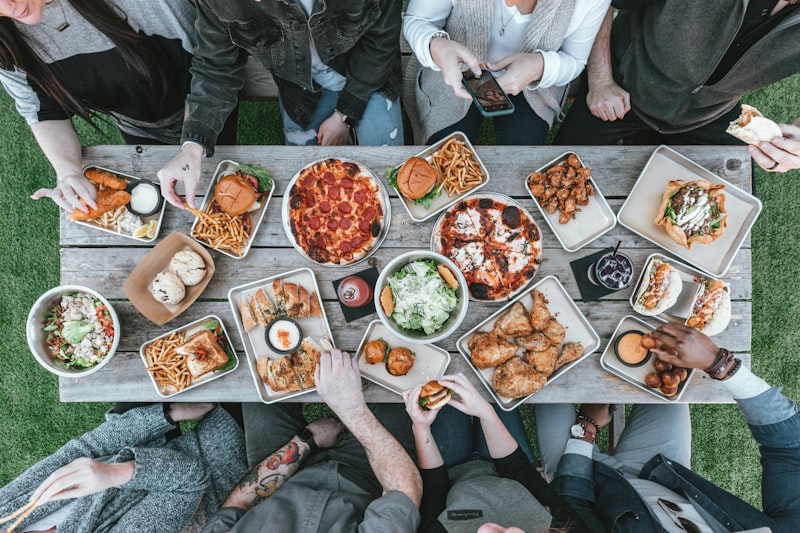
A rustic plated dish on a dark wooden tavern table
Boarische Kuchl · The Bavarian Table

Bavarian Cooking Without Vegetable Oil

From the beer gardens of Munich to the farm kitchens of the Alpine foothills, Bavaria has always cooked with butter, Schmalz, and patience. Roast pork with crackling, pretzels warm from the stone, and not a drop of seed oil in sight.

Almbutter Schmalz Butterschmalz
Schweinsbraten
From the recipe collection
Almbutter

Butter From the Alm

Bavarian cooking begins with butter churned in the high alpine dairies. It browns the dumplings, finishes the sauces, and glosses every warm pretzel in this collection.

Schmalz

Honest Schmalz

Schmalz, the rendered lard of the Bavarian larder, carries the roast pork to its crackling finish and gives the Wirtshaus kitchen its unmistakable depth.

Nia

Never Vegetable Oil

No seed oils, no shortcuts. Only the traditional fats that the beer gardens and farmhouse kitchens of Bavaria have trusted for generations.

From Our Kitchen

Bavarian Recipes

Six beloved dishes from the Wirtshaus tables and beer gardens of Bavaria, each cooked with the honest fats that bring out the best in every ingredient.

Wirtshaus Schweinsbraten, sliced Bavarian roast pork with dark gravy on a warm plate

Schweinsbraten

Roast pork with dark beer gravy

3 hr 15 min·6 servings·Medium

The centerpiece of every Bavarian Sunday. Pork shoulder roasted slowly over root vegetables and dark beer until the rind shatters into crackling, finished with a gravy mounted in cold butter.

Ingredients

  • 1.8 kg pork shoulder with the rind on
  • Fine salt and freshly ground black pepper
  • 2 tbsp Schmalz (lard)
  • 2 onions, thickly sliced
  • 2 carrots, roughly chopped
  • 4 garlic cloves, crushed
  • 1 tbsp caraway seeds, lightly crushed
  • 1 tsp sweet paprika
  • 500 ml Bavarian dark beer (Dunkel)
  • 400 ml beef or vegetable broth
  • 2 tbsp cold butter, to finish the gravy

Instructions

  1. Score the rind in a close diamond pattern, rub the whole joint with salt, and let it sit uncovered in the refrigerator for at least 2 hours so the skin dries.
  2. Rub the meat side with the crushed garlic, caraway, paprika, and pepper, keeping the rind clean and dry.
  3. Melt the Schmalz in a roasting pan and brown the onions and carrots over lively heat for 5 minutes.
  4. Set the pork rind side up on the vegetables, pour the broth around it, and roast at 160°C (325°F) for 2 hours, ladling a little dark beer over the meat side every 30 minutes.
  5. Raise the oven to 230°C (450°F) and roast 20 to 30 minutes more until the rind puffs into crisp crackling.
  6. Rest the roast 15 minutes, then strain the pan juices into a saucepan, simmer with the remaining beer until glossy, and swirl in the cold butter.
  7. Carve into thick slices and serve with the gravy, potato dumplings, and cabbage.
Biergarten Steckerlfisch, a whole grilled trout glazed with paprika butter and herbs

Steckerlfisch

Grilled trout with paprika butter

40 min·2 servings·Easy

The smoky fish on a stick of the Bavarian beer garden. Whole trout basted over the fire with a paprika and garlic butter until the skin crisps and the flesh stays juicy.

Ingredients

  • 2 whole trout, cleaned and patted dry
  • Fine salt, inside and out
  • 120 g soft butter
  • 2 garlic cloves, finely grated
  • 1 tbsp sweet paprika
  • 1 tsp caraway seeds, finely ground
  • A pinch of cayenne (optional)
  • 2 tbsp parsley, chopped
  • 1 lemon, in wedges
  • 2 sturdy wooden skewers, soaked in water

Instructions

  1. Beat the soft butter with the garlic, paprika, caraway, cayenne, and a good pinch of salt until smooth.
  2. Season the trout inside and out with salt and thread each fish lengthwise onto a soaked skewer.
  3. Brush the fish generously with the paprika butter on both sides.
  4. Grill over medium embers, or under a hot broiler, about 6 to 8 minutes per side, basting with more butter at every turn.
  5. The fish is done when the skin is blistered and the flesh lifts easily from the bone.
  6. Rest 3 minutes, shower with parsley, and serve with lemon wedges and fresh pretzels.
Brotzeit Obatzda, a Bavarian cheese spread served with radishes and fresh vegetables

Obatzda

Beer garden cheese spread

20 min·6 servings·Easy

The rosy cheese spread of the Brotzeit board. Ripe Camembert mashed with good butter, sweet paprika, and a splash of wheat beer, served with radishes and a warm pretzel.

Ingredients

  • 250 g ripe Camembert, at room temperature
  • 100 g soft butter
  • 60 g quark or cream cheese
  • 1 small red onion, finely diced
  • 2 tsp sweet paprika
  • ½ tsp caraway seeds, lightly crushed
  • 3 tbsp Bavarian wheat beer
  • Salt and freshly ground black pepper
  • 2 tbsp chives, finely snipped
  • Radishes and warm pretzels, to serve

Instructions

  1. Let the Camembert and butter stand until fully soft, then mash them together with a fork, leaving some texture.
  2. Fold in the quark until the mixture is creamy but still rustic.
  3. Season with the paprika, caraway, salt, and pepper, then loosen with the wheat beer, one spoonful at a time.
  4. Stir in half of the diced onion and taste for salt.
  5. Rest the Obatzda 30 minutes so the paprika blooms and the flavors settle.
  6. Mound onto a board, scatter with the remaining onion and the chives, and serve with radishes and warm pretzels.
Sonntag Leberknoedelsuppe, a liver dumpling resting in clear golden beef broth

Leberknödelsuppe

Liver dumpling soup

1 hr·4 servings·Medium

The opening course of the Bavarian Sunday table. Tender dumplings of bread roll and beef liver, brightened with marjoram and lemon zest, poached and served in clear beef broth.

Ingredients

  • 250 g beef liver, trimmed and very finely chopped
  • 4 stale white rolls (Semmeln), thinly sliced
  • 150 ml warm whole milk
  • 1 small onion, finely diced
  • 2 tbsp butter
  • 1 large egg
  • 3 tbsp dry breadcrumbs, plus more if needed
  • 1 tsp dried marjoram
  • Finely grated zest of half a lemon
  • Salt and freshly ground black pepper
  • 1.5 litres clear beef broth, plus chives to serve

Instructions

  1. Pour the warm milk over the sliced rolls and let them soak 15 minutes until fully softened.
  2. Soften the onion in the butter over gentle heat for 5 minutes and let it cool slightly.
  3. Squeeze the rolls lightly, then combine with the liver, onion, egg, breadcrumbs, marjoram, lemon zest, salt, and pepper.
  4. Rest the mixture 15 minutes; it should hold a shape, so add a spoon more breadcrumbs if it feels loose.
  5. With wet hands, form 8 dumplings the size of a small plum.
  6. Slide them into barely simmering salted water and poach gently 15 minutes until they float and feel springy.
  7. Warm the beef broth, set two dumplings in each bowl, ladle the broth over, and finish with chives.
Backstube Laugenbrezn, freshly baked Bavarian pretzels with a deep mahogany crust

Laugenbrezn

Bavarian pretzels

2 hr 30 min·8 pretzels·Medium

The mahogany pretzel of the Munich bakery, made at home. A firm butter-enriched dough, shaped into the classic knot, bathed in a baking soda kettle, and baked to a deep shine.

Ingredients

  • 500 g bread flour
  • 10 g fine salt
  • 7 g instant yeast
  • 1 tsp barley malt syrup or sugar
  • 280 ml lukewarm water
  • 25 g soft butter
  • 1.5 litres water, for the dipping bath
  • 80 g baking soda, for the dipping bath
  • Coarse pretzel salt, for sprinkling
  • 20 g melted butter, for brushing (optional)

Instructions

  1. Knead the flour, salt, yeast, malt, water, and soft butter for 10 minutes to a firm, smooth dough, then cover and rise 1 hour.
  2. Divide into 8 pieces and roll each into a 60 cm rope, thick in the belly and tapered at the ends.
  3. Swing the ends into the classic pretzel knot, press them onto the belly, and set on a lined tray.
  4. Chill the shaped pretzels uncovered for 30 minutes so the surface dries slightly.
  5. Bring the water to a bare simmer, stir in the baking soda carefully, and dip each pretzel for 20 seconds, turning once.
  6. Return to the tray, sprinkle with coarse salt, and slash the belly of each pretzel with a sharp blade.
  7. Bake at 220°C (425°F) for 15 to 18 minutes until deep mahogany, then brush the warm pretzels with melted butter if you like.
Kirta Apfelkuecherl, golden apple fritters dusted with cinnamon sugar on a warm plate

Apfelkücherl

Apple fritters in Butterschmalz

45 min·4 servings·Easy

The fairground sweet of the Bavarian Kirta. Rings of tart apple in a light batter, fried golden in clarified butter and rolled warm through cinnamon sugar.

Ingredients

  • 4 firm tart apples, such as Boskoop
  • Juice of half a lemon
  • 150 g plain flour
  • 200 ml whole milk
  • 2 eggs, separated
  • 1 tbsp sugar, plus 80 g for the cinnamon sugar
  • 1 tsp vanilla sugar
  • A pinch of salt
  • 2 tsp ground cinnamon
  • 250 g Butterschmalz (clarified butter), for frying

Instructions

  1. Whisk the yolks with the milk, flour, 1 tbsp sugar, vanilla sugar, and salt to a smooth batter and rest it 15 minutes.
  2. Peel and core the apples, slice into 1 cm rings, and turn them in the lemon juice.
  3. Beat the egg whites to soft peaks and fold them gently into the batter.
  4. Melt the Butterschmalz in a wide pan until a drop of batter sizzles at once, about 170°C.
  5. Dip each apple ring through the batter and fry 2 to 3 minutes per side until puffed and golden.
  6. Drain briefly on a rack, then toss the warm fritters in the cinnamon sugar.
  7. Serve at once, on their own or with a spoon of lightly whipped cream.
A cook working at a warm stove in a busy home kitchen
Our Kitchen

The Kitchen Behind Marlir Kuchl

Marlir Kuchl is a small home kitchen devoted to the cooking of Bavaria, the land of chestnut-shaded beer gardens, Sunday roasts that perfume the whole house, and pretzels eaten warm before they ever reach a basket. We write these recipes down the way they are still cooked in Wirtshaus kitchens and farmhouse stoves, patiently, precisely, and always with a generous hand on the butter.

Our only house rule is an old one: butter from the alpine dairies, Schmalz rendered slowly the traditional way, Butterschmalz clarified on a low flame and nothing else. Vegetable oil never comes through our door, because it never sat on the tables we learned from.

An Guadn, may it feed you well.